



🌄 Get in Touch! 🌄
Whether you have a question, an idea, or just want to say hello,
feel free to reach out—we’re here to help.
Use the form below to drop us a message, and we’ll get back to you as soon as we can. Yours truly, Hotep-Nefer-Ra and Friends
Email: treehuggers2020@gmail.com

💡 Expanded Scholarly Reference Library & Knowledge/Science Framework 💡
The Book of Light is a unified research and philosophical framework that brings together the full breadth of human scientific knowledge under a single interpretive lens: light as the fundamental connective principle of reality, life, and understanding. It is built upon a curated and systematically organized master bibliography of peer-reviewed studies, academic books, landmark discoveries, and foundational scientific papers spanning all major disciplines of modern and historical inquiry.
For those interested in exploring the underlying research, the full bibliography and source material behind the Book of Light is extensive and carefully organized across all major scientific disciplines and intellectual traditions. It includes peer-reviewed studies, academic books, institutional research, and historical documents from across the world and throughout human history.
Anyone interested in the sources, references, or deeper academic structure behind this work is more than welcome to reach out for access to the full compiled bibliography and research framework supporting the Book of Light.
At its core, the Book of Light is not a rejection of science but an integration of it. It compiles and references the most important scholarly work across a number of studies, including, but not limited to; cosmology, physics, biology, neuroscience, Earth sciences, philosophy, and the history of human knowledge itself. The aim is to show how the evolution of the universe, the development of life, and the emergence of consciousness can be understood as a continuous unfolding process mediated through energy, structure, and most importantly, Light.
The bibliography underpinning this work draws from thousands of established scientific sources and peer-reviewed journals, including major institutions and research traditions across the world. These sources span both historical and contemporary scholarship, from ancient astronomical observations and early philosophical inquiry to modern high-energy physics, climate modeling, genomic science, cognitive neuroscience, and more. The result is a structured map of knowledge that reflects both the depth and breadth of human understanding.
The Book of Light organizes knowledge into interconnected domains, each representing a different expression of reality as studied by science, including, but not limited to;
Cosmology explores the origin, structure, and evolution of the universe, from the Big Bang to large-scale cosmic structure.
Physics provides the fundamental laws governing matter, energy, space, time, and light itself.
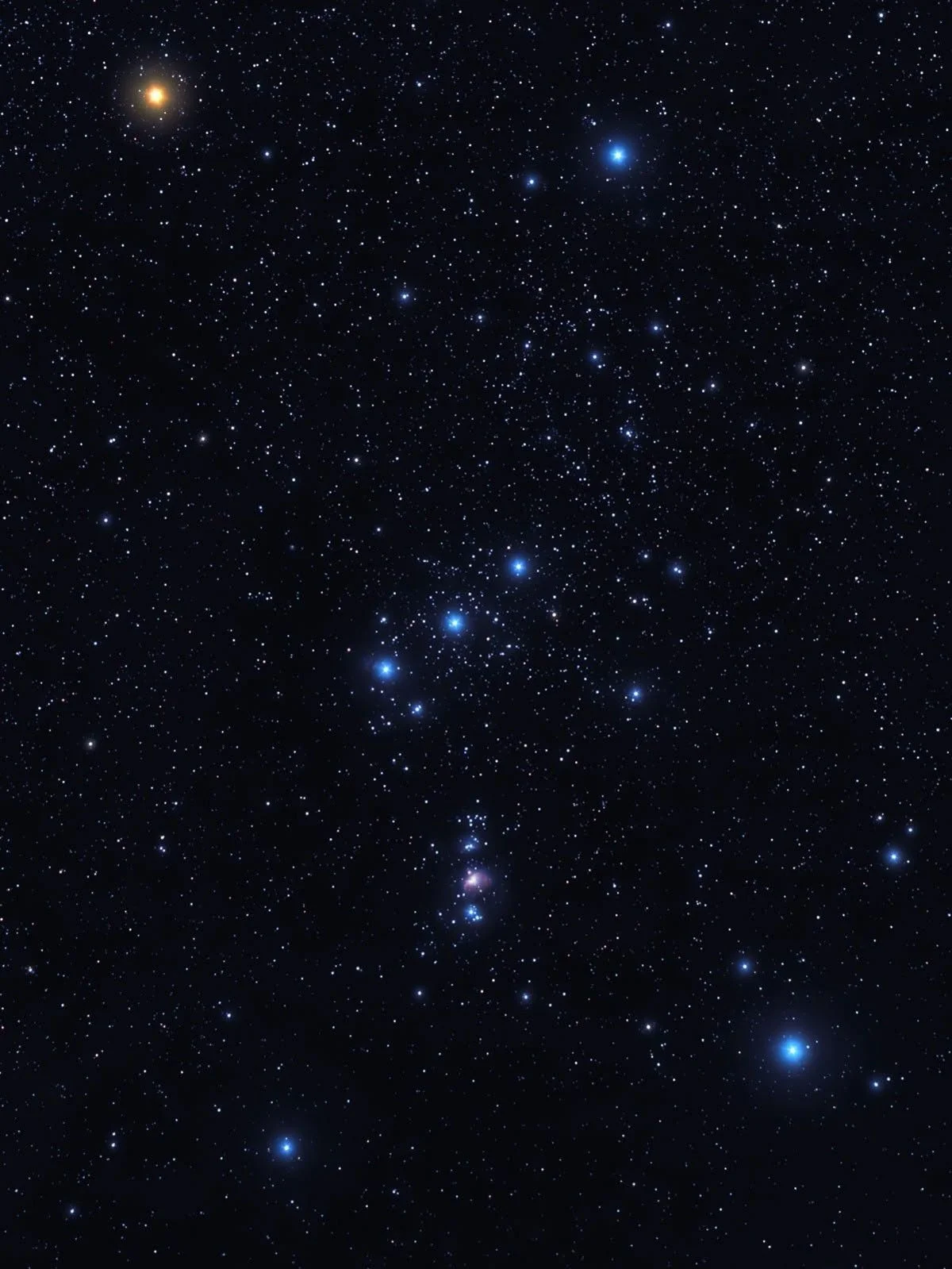
Astronomy and Astrophysics examine stars, galaxies, planetary systems, and cosmic evolution.
Heliophysics focuses on the Sun and its interactions with the solar system, including solar radiation and magnetic activity.
Geology, Earth Sciences, Climate Science, and Oceanography study Earth as an integrated dynamic system shaped by energy flows, including solar influence.
Astrobiology investigates the conditions for life beyond Earth and the universal principles that govern biological emergence.
Biochemistry, Evolution, and Genetics describe the molecular origins, mechanisms, and development of life through time.
Ecology examines the relationships between organisms and their environments as interconnected systems of energy and information exchange.
Neuroscience explores the biological foundations of perception, cognition, and brain function, including how organisms interpret light and sensory input.
Consciousness Studies address the nature of awareness, perception, and subjective experience as emergent properties of complex biological systems.
Anthropology and Archaeology trace the development of human cultures, cognition, and early symbolic systems, including ancient interpretations of the Sun and sky.
Egyptology and ancient historical studies preserve early solar cosmologies, symbolic systems, and foundational cultural interpretations of light and order.
History of Science documents the evolution of human knowledge systems, from early observation to modern experimental methodology.
Philosophy explores the conceptual foundations of reality, knowledge, perception, and meaning, often using light as a central metaphor for understanding.
Systems Theory provides a framework for understanding interconnected structures across all domains of nature, from ecosystems to galaxies.
Information Theory examines how energy and signals encode, transmit, and transform meaning across physical and biological systems.
Ethics investigates the principles governing human behavior, cooperation, and flourishing in relation to both social and ecological systems.
Across all of these domains, a consistent pattern emerges: Light is not only a physical phenomenon studied in physics and astronomy, but also a fundamental medium through which life, perception, and knowledge operate. It is the driver of photosynthesis in biology, the basis of vision in neuroscience, the carrier of information in physics, and the central observational tool of all modern scientific inquiry.
The Book of Light brings these threads together into a unified intellectual architecture. Rather than treating disciplines as separate silos, it highlights their interdependence. Cosmology informs astrophysics, astrophysics informs planetary science, planetary science informs Earth systems, Earth systems inform biology, biology informs neuroscience, and neuroscience informs cognition and knowledge itself. Each level is connected through energy flow, systemic organization, and information—much of which is mediated by light.
Importantly, this work is grounded in established academic research. The bibliography includes peer-reviewed journals, major scientific institutions, foundational textbooks, Nobel Prize-level discoveries, and historical sources from across civilizations. It draws from the full span of human intellectual history, from early observational astronomy to cutting-edge quantum physics and systems biology. Nothing is speculative in isolation; instead, it is a synthesis of verified scientific knowledge organized into a coherent interpretive structure.
The purpose of the Book of Light is not to replace science, but to reveal its underlying continuity. It demonstrates that the same fundamental principles appear repeatedly across scales: from subatomic particles to galaxies, from cellular processes to neural networks, from ecological systems to human civilizations. Light serves as both a literal and conceptual bridge between these layers of reality.
This synthesis also emphasizes that knowledge itself is a cumulative, evolving process. Human understanding has developed through centuries of observation, experimentation, mathematical modeling, and philosophical reflection. The Book of Light acknowledges this progression by integrating sources from all eras—ancient, classical, medieval, modern, and contemporary—showing how each contributed to the gradual expansion of human awareness.
Ultimately, the Book of Light is an invitation to view reality as a continuous unfolding system of interconnected processes, all participating in the transformation and transmission of energy, structure, and information. It reflects the idea that the universe is not fragmented into isolated fields of study, but is instead a single coherent system whose patterns can be understood through multiple scientific and philosophical lenses.
The following is a scholarly framework behind the entire Book of Light.
I. FOUNDATIONS OF REALITY (PHYSICS OF LIGHT AND EXISTENCE)
Cosmology — Study of the origin, structure, evolution, and fate of the universe as a whole system of spacetime, energy, and matter.
Relativistic Physics — Einsteinian framework describing gravity as curvature of spacetime and light as invariant speed structure of reality.
Quantum Mechanics — Probabilistic framework governing particles, waves, and the fundamental uncertainty structure of reality.
Quantum Field Theory — Description of particles as excitations in universal fields, including the electromagnetic field of light.
Standard Model Physics — Mathematical classification of known particles and forces excluding gravity.
Electromagnetism — Maxwell’s unified field theory describing electricity, magnetism, and light as one continuum.
Photon Physics (Quantum Optics) — Study of light as quantized packets of energy and information carriers.
Thermodynamics — Laws governing energy flow, entropy, and transformation across all physical systems.
Statistical Mechanics — Emergence of macroscopic order from microscopic randomness.
Nonlinear Dynamics / Chaos Theory — Study of complex systems where small changes produce large-scale effects.
II. ASTROPHYSICAL AND COSMIC LIGHT SYSTEMS
Astrophysics — Physical processes governing stars, galaxies, and cosmic evolution.
Stellar Physics — Birth, lifecycle, and death of stars as nuclear fusion light engines.
Nucleosynthesis — Formation of chemical elements inside stars through fusion and supernovae.
Galactic Dynamics — Motion and structure of galaxies shaped by gravity and dark matter.
Dark Matter Research — Invisible mass influencing cosmic structure through gravitational effects.
Dark Energy Cosmology — Expansion of the universe driven by unknown energy component.
Heliophysics (Solar Physics) — Study of the Sun as a plasma fusion system emitting life-sustaining radiation.
Solar Magnetic Field Physics — Sunspot cycles, flares, and electromagnetic solar behavior.
Space Plasma Physics — Behavior of ionized matter in stars, solar wind, and interstellar space.
Exoplanet Science — Detection and analysis of planets beyond the solar system.
III. PLANETARY AND EARTH SYSTEM SCIENCES
Earth System Science — Integrated study of atmosphere, biosphere, oceans, and geosphere as one system.
Geology — Study of Earth’s physical structure, minerals, and deep-time evolution.
Geophysics — Physics of Earth’s interior, magnetic field, and seismic systems.
Atmospheric Science — Dynamics of gases, weather, and climate regulation.
Climate Science — Long-term energy balance of Earth driven primarily by solar input.
Oceanography — Study of global ocean currents and thermal energy distribution.
Hydrology — Water cycle as energy and life distribution system.
Paleoclimatology — Reconstruction of ancient climates through geological records.
Plate Tectonics — Movement of Earth’s crust driven by internal heat and solar-regulated surface cycles.
IV. BIOLOGY AS SOLAR-DRIVEN LIFE SYSTEM
Astrobiology — Study of life in the universe and conditions required for biological emergence.
Abiogenesis Research — Scientific models of how life arises from non-living chemical systems.
Biochemistry — Molecular study of life driven by energy transformations.
Molecular Biology — DNA, RNA, proteins as information-processing systems.
Genetics & Genomics — Heredity and biological coding systems.
Evolutionary Biology — Life as adaptive system shaped by environmental and energy constraints.
Photosynthesis Research — Direct conversion of solar energy into biological energy.
Cell Biology — Cells as energy-processing light-dependent biochemical systems.
Microbiology — Microbial life as foundational planetary energy processors.
Ecology — Energy flow through ecosystems driven by sunlight input at trophic base.
V. NEUROSCIENCE, PERCEPTION, AND LIGHT-BASED CONSCIOUSNESS
Neuroscience — Biological structure and function of the nervous system.
Visual Neuroscience — Conversion of photons into neural signals and perception.
Cognitive Science — Integrated study of perception, memory, and reasoning.
Chronobiology — Biological clocks synchronized by solar light cycles.
Photobiology — Biological effects of light on cellular and systemic function.
Neurophysiology — Electrical signaling in the brain as bioelectric information processing.
Predictive Processing Theory — Brain as inference engine modeling sensory input.
Consciousness Studies — Investigation of subjective experience and awareness.
Neural Information Theory — Brain as encoding-decoding system for environmental light data.
VI. HUMAN ORIGINS, HISTORY, AND SOLAR CULTURE
Anthropology — Study of human evolution, culture, and cognition.
Archaeology — Material remains of human societies and symbolic systems.
Paleontology — Evolutionary fossil record of life on Earth.
Egyptology — Study of ancient Egyptian civilization centered on solar cosmology (Ra, Aten, Horus symbolism).
Archaeoastronomy — Ancient observation of celestial and solar cycles in human cultures.
Mythology Studies — Symbolic solar narratives across civilizations.
History of Science — Evolution of human understanding of nature and light.
Ancient Astronomy — Early observational systems tracking Sun, Moon, and stars.
Comparative Religion (Solar Traditions) — Cross-cultural solar symbolism systems.
VII. LANGUAGE, MEANING, AND SYMBOLIC SYSTEMS
Linguistics — Structure, evolution, and function of language systems.
Historical Linguistics — Evolution of words and meaning across time.
Etymology — Origin and transformation of words, especially those linked to light (e.g., lumen, lux, helios).
Semiotics — Study of signs, symbols, and meaning formation.
Hermeneutics — Interpretation of texts, symbols, and layered meaning systems.
Comparative Philology — Cross-language analysis of ancient texts and root meanings.
Mythological Linguistics — Language evolution within symbolic solar cultures.
Sacred Text Analysis — Study of ancient cosmological and symbolic writings.
VIII. PHILOSOPHY, MIND, AND MEANING
Philosophy of Science — Foundations of scientific reasoning and knowledge systems.
Metaphysics — Nature of existence, being, and reality beyond physical description.
Epistemology — Study of knowledge, truth, and justification.
Philosophy of Mind — Nature of consciousness and mental states.
Phenomenology — Study of lived experience and perception.
Ethics — Systems of moral reasoning and human flourishing.
Ontology — Structure of being and reality categories.
Process Philosophy — Reality as dynamic unfolding system rather than static objects.
IX. SYSTEMS, INFORMATION, AND COMPLEXITY SCIENCE
Systems Theory — Interconnected structures across all domains of nature.
Cybernetics — Feedback, control, and self-regulating systems.
Information Theory — Quantification of information, signal, and entropy.
Complexity Science — Emergent behavior in nonlinear systems.
Network Theory — Structure of interconnected nodes across biological, social, and cosmic systems.
Computational Theory — Mathematical modeling of processes and algorithms.
Artificial Intelligence — Machine-based information processing systems.
X. LIGHT AS UNIVERSAL INTEGRATION PRINCIPLE
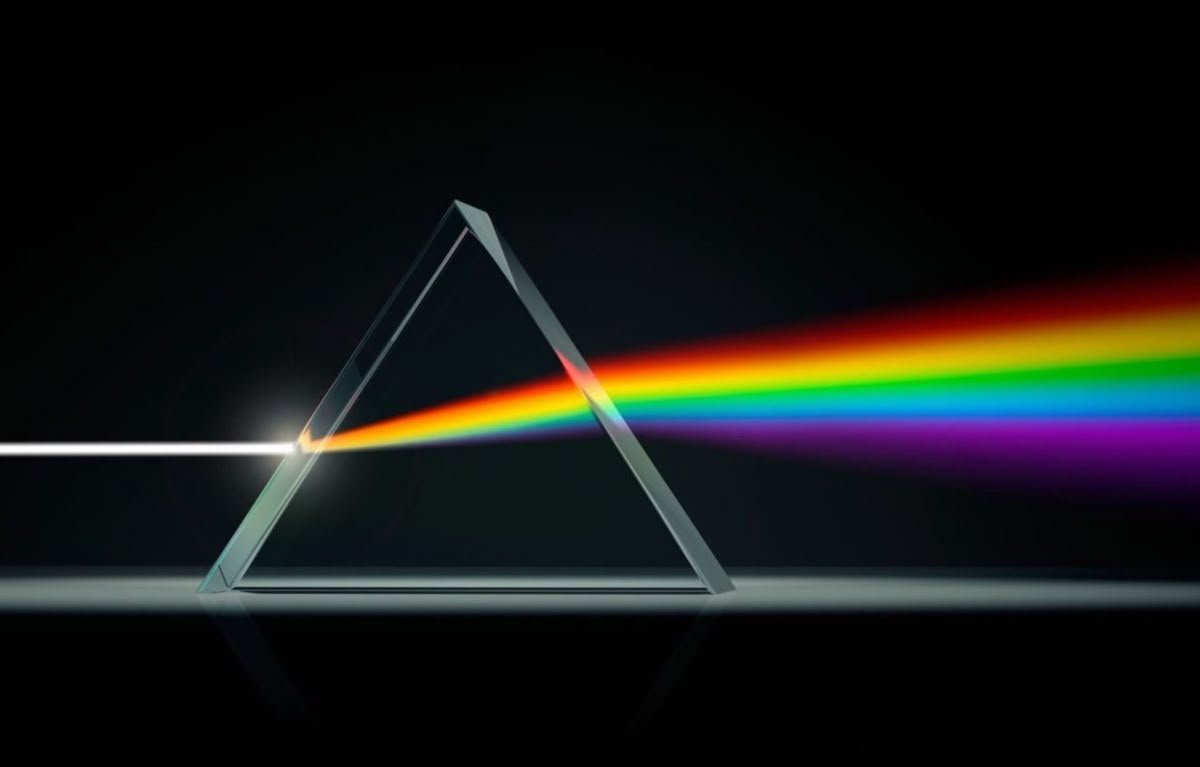
Optics — Behavior, propagation, and interaction of visible light.
Spectroscopy — Analysis of matter through light signatures.
Photonic Systems — Light-based information and energy technologies.
Vision Science — Biological interpretation of light into perception.
Electromagnetic Spectrum Science — Full range of radiation beyond visible light.
Solar Radiation Systems — Sun as primary energy driver of Earth and life.
Light-Based Information Transfer — Fiber optics, quantum communication, and signaling systems.
XI. ETHICS, CIVILIZATION, AND HUMAN FLOURISHING
Moral Philosophy — Principles governing human behavior and values.
Environmental Ethics — Responsibility toward Earth’s life-support systems.
Evolutionary Ethics — Biological roots of cooperation and morality.
Political Anthropology — Formation of human governance systems.
Sociology — Structure and dynamics of human societies.
Civilizational Studies — Rise and evolution of complex societies.
Sustainability Science — Long-term stability of planetary systems.
Human Flourishing Studies — Conditions for well-being and thriving societies.
FINAL UNIFIED STATEMENT
The Book of Light framework integrates all of the above fields into a single continuous model of reality in which:
Light is the primary observable structure of the universe
Energy, matter, life, and consciousness are interconnected systems of transformation
Knowledge itself is a cumulative light-processing system across biological and cultural evolution
Ancient symbolic systems (including Egypt) and modern science describe different layers of the same cosmic continuity
Fair Use / Fair Dealing Notice: This website contains images, artwork, photographs, and historical materials used for purposes of education, research, commentary, criticism, analysis, and public understanding. All rights remain with their respective copyright holders. The inclusion of such materials is intended to support learning and discussion within the context of the Book of Light. If you are a rights holder and wish to discuss attribution or removal, please contact us directly.